How to Pack a Beach Bag for a British Coastal Day Out: A Checklist
The British seaside rarely does one thing at a time. You can arrive in warm sunshine, eat lunch under a grey sky, and spend the last hour hunched behind a windbreak while someone's flip-flop sails past your head. That is not a reason to stay at home. It is a reason to pack a bag that can cope with three weathers before teatime.
The trick is not a longer list, but a smarter one: a handful of items that do double duty, a few things people always forget, and a quick look at the tide table before you leave the house. Here is how to build a beach bag that works from Whitley Bay to Woolacombe.
Start With the Right Bag
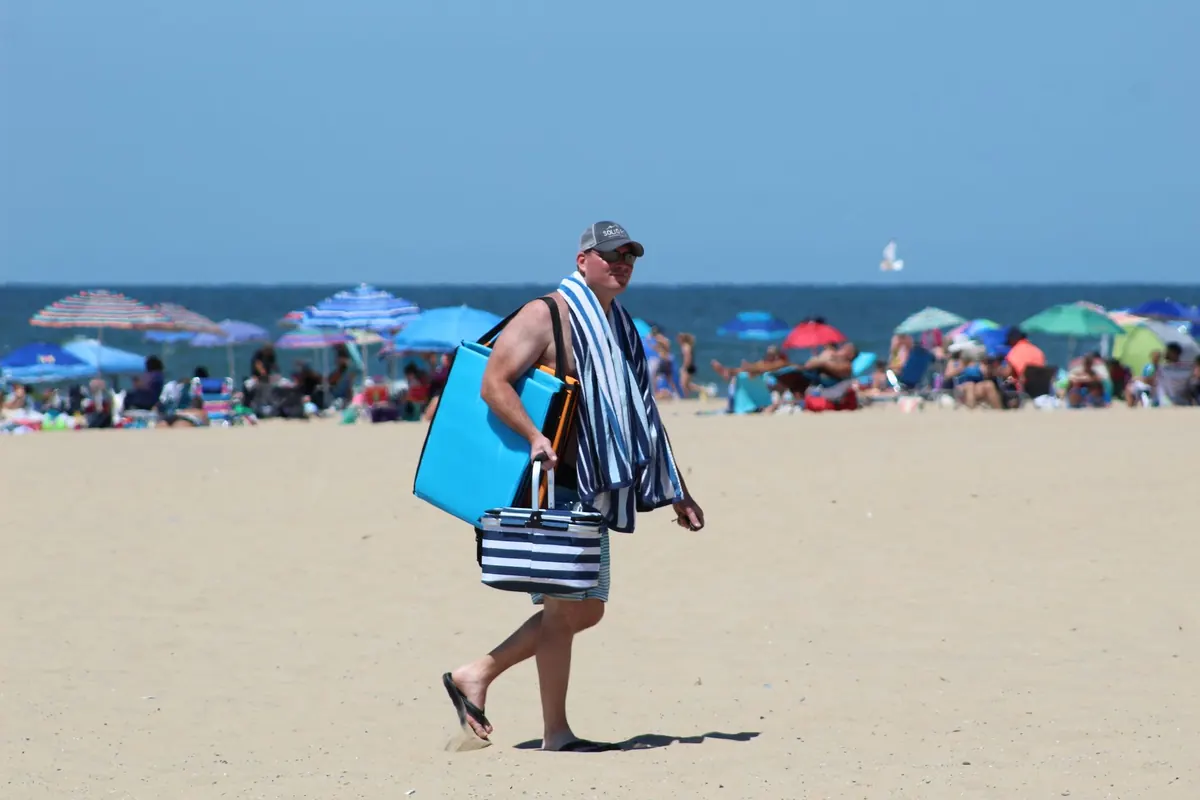
A bag you resent carrying will drain the fun out of a day faster than a cold wind. If you are parking beside the beach, an open cotton tote is easy to shake out and light to haul across the sand. If there is a walk involved — over dunes, down a cliff path, along a harbour wall — take a rucksack and keep your hands free for children, dogs and railings. Wide straps matter more than you think once the bag is loaded with water bottles.
Whatever you choose, look for a zip. An open bag on a breezy beach collects sand, and anything small vanishes into it. Inside, add a lightweight dry bag or a large zip-top pouch for phones, keys, cards and any medication that needs to stay dry. Sand gets into everything eventually; you are simply choosing what it reaches first.
Two bags, not one
Keep a small separate bag for wet towels, swimming costumes and damp socks. It stops the sandwich situation. A plain drawstring bag does the job and folds into nothing when you are not using it.
Dress for Four Seasons in One Afternoon
The reliable formula for a British coast is layers rather than one clever item. A cotton T-shirt, a fleece or hoodie, and a light waterproof shell will cover most days from May to September. Add a spare jumper in the car boot for the drive home, plus dry socks. Few things feel worse than sitting in traffic with damp feet and no plan.
Footwear deserves a moment's thought. Trainers are fine for the promenade and the walk down, but if you plan to swim or paddle, pack something you can slip on and off easily. Wellies are excellent for rock pools and estuary mud and completely hopeless for walking any distance.
The windbreak question
A windbreak is the single most useful item on an exposed beach, and it changes a day. Position it with the open side facing inland, and angle it slightly so it does not act like a sail. Push the poles in deep and use guy lines if you have them, because a windbreak that collapses in a gust is worse than none at all. Sand pegs or a couple of heavy bags at the base will hold it steady.
Do not treat it as a substitute for shade. Fabric windbreaks block wind, not sun, and the sun still reaches you from the side and above.
Sun Protection When the Sky Is Grey
Cloud cover is not protection. You can burn quite comfortably under a hazy sky, and wind makes it harder to notice because you do not feel the heat. Use a broad-spectrum sun cream of at least factor 30, apply it before you leave the house, and reapply every couple of hours and after swimming or towelling off. A wide-brimmed hat, sunglasses and a light long-sleeved shirt for the middle of the day are more effective than any single bottle of cream.
Children need more attention than adults. A sun hat with a neck flap, a rash vest for the water, and shade during the strongest part of the day all help. If anyone in your group burns easily, has very fair skin, or takes medication that affects sensitivity to sunlight, ask a pharmacist or GP for advice before you go.
Food, Drink and Family Essentials
Sand gets into food faster than into anything else, so keep edibles in a cool bag with a lid and ice packs. Freeze half-filled water bottles the night before: they keep everything cold and provide a drink as they thaw. A flask of tea is never wasted on a British beach.
The core family kit, packed so you can find it without unpacking everything:
- Water bottles for each person, plus one spare
- Cool bag with ice packs, snacks that do not melt, and a flask
- One towel per person and one extra, shoved in the wet bag
- Sun cream, hat, sunglasses and a light long-sleeved layer
- Windbreak, groundsheet or rug, and a couple of pegs
- Wet wipes, kitchen roll, hand sanitiser and a bin bag
- Small first-aid pouch: plasters, antiseptic wipes, any personal medication
- Spare nappy, spare pants, spare socks — choose according to your household
- Buckets, spades, a ball, and a book for the person who wants to sit still
Know the Tide Before You Unpack
Tides move faster than most people expect, and they arrive from behind you while you are facing the sea. Check the times before you leave, using an official tide table online or the noticeboard at the harbour or beach entrance. Then, once you have chosen your spot:
- Note the time of high tide and how much beach is left above it.
- Look behind you and identify your exit route — steps, a slipway, a path between rocks.
- Pick a fixed landmark, such as a groyne or a large rock, and watch how quickly the water reaches it.
- Agree a meeting point with older children in case you split up.
Never walk out onto sandbanks, mudflats or around a headland without local knowledge; these are exactly the places where people get cut off. Swim between the red and yellow flags where lifeguards are on patrol, and if you are unsure about conditions, ask them. They would far rather answer a question than launch a rescue.
A Two-Minute Check Before You Leave
Run through this at the front door. Have you looked at the forecast and the tide times? Are the water bottles filled? Is the sun cream at the top of the bag rather than buried under towels? Does everyone have shoes they can walk in? Is there cash or a card for parking, and does the machine take the one you have? Small checks, done quickly, save a lot of grumbling later.
Pack Once, Adapt Often
The easy version of all this is to keep a base kit in the car boot through the summer: windbreak, rug, towels, spare layers, first-aid pouch, bin bags. Restock it after each trip rather than rebuilding it from scratch every time, and a spontaneous beach afternoon becomes genuinely spontaneous. Add food, water and the people, and you are ready.
Then take everything home again, including the rubbish and the stray socks. The coast gives you a good day in exchange for very little — leaving it as you found it is a fair trade.
Photo: INNA BELAND / Pexels