Coastal Walking Common Mistakes: How to Avoid Getting Caught by the Tide
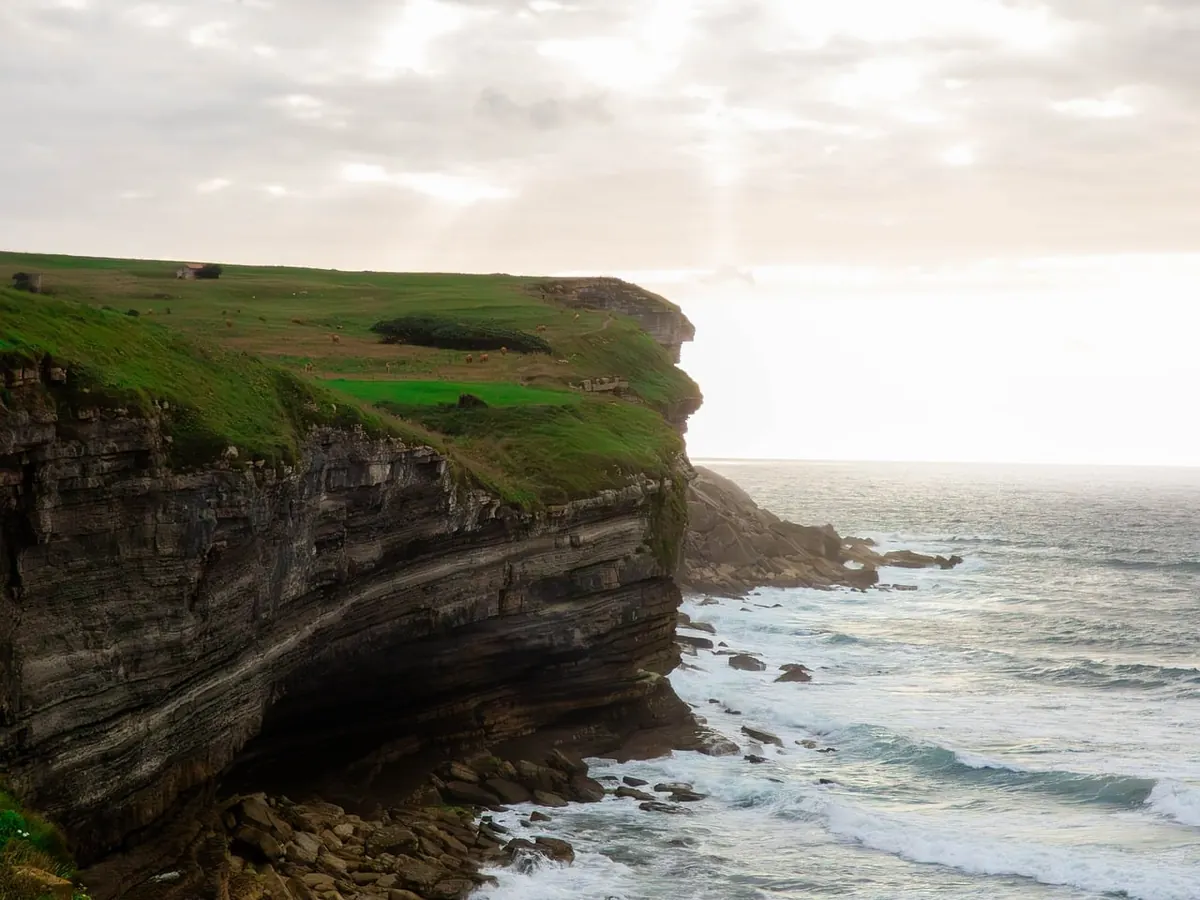
Most people who walk the coast regularly have had one of those moments: the beach that looked enormous on the way out is suddenly a narrow strip of shingle, and the way back lies round a point you can no longer see the far side of. The tide doesn't chase you. It quietly removes your options, one at a time, and the decision that put you in trouble was usually made an hour earlier.
Almost every tide-related incident on the coast comes down to a handful of avoidable errors. Here are the ones that catch people out most often, and the habits that keep you comfortably ahead of the water.
Tides rise in a curve, not a straight line
This is the single most useful thing to understand before you walk anywhere tidal. Between low and high water, the tide typically rises by roughly one twelfth of its total range in the first hour, two twelfths in the second, three in the third, three in the fourth, two in the fifth and one in the sixth.
In plain terms, the water moves fastest in the middle of a rising tide. That's when a route that was perfectly fine becomes a route that isn't. If you work out that you have "four hours until high water", you don't have four hours of safe walking, and on a big spring tide near a full or new moon you have even less. Plan around the middle hours, not the high-water time alone.
Mistake one: treating one tide table as gospel
Tide tables are usually published for a standard port, and the times for that port may be noticeably different from the water at the beach you're actually standing on. Estuaries, shallow bays and long inlets can lag well behind the open coast, and a strong onshore wind or low pressure can push water higher up the beach than the table suggests. Wind is the bit people forget: a brisk onshore blow can pile water against the shore and hold it there.
So do two things. First, check the times for the nearest relevant port, not the nearest big town on a map. Second, look at the beach itself: seaweed lines, wet sand above the current waterline and the state of the rocks tell you how much higher the water reaches on a big tide.
Mistake two: committing to a headland
The classic cut-off looks like this. A sandy beach runs out to a low rocky point, and beyond it is another lovely bay. On the way out, you walk round the point without thinking. Two hours later the same passage is thigh-deep, and the cliff behind it is too steep and loose to climb. There is no third option.
Treat headlands, causeways, spits and long rock platforms as one-way doors until you've proved otherwise. Ask yourself before you pass: if the water is here when I come back, what do I do? If the answer is "swim" or "climb", turn round now. Leave a generous margin. A personal rule many coastal walkers use is not to round a tidal point within two hours either side of high water, and to shorten that on spring tides.
If the water is already between you and the path
Don't try to outrun it, and don't climb wet rock. Move to the highest safe ground you can reach, stay there and call 999, asking for the coastguard. Give your location clearly, using a what3words reference or a grid reference if you have one. Do not enter the water to swim for it unless you are told to; cold water and currents make that far harder than it looks. Someone will come and get you, and that is a much better outcome than a scramble you regret.
Mistake three: underestimating what's underfoot
Tide planning is only half of it. Coastal ground is often wet, and wet coastal ground is often greasy. The common offenders:
- Green algae on rock, which is like ice when wet, particularly on shaded north-facing surfaces.
- Seaweed-covered boulders and slipways, including the ones that look dry on top.
- Clay and mud at the top of beaches, which grips like glue and then releases without warning.
- Loose pebbles and shingle banks that shift under each step and roll out from beneath you.
- Wet wooden steps, boardwalks and handrails on coast paths, which rot quietly and are often the weakest thing on the route.
Wear footwear with real grip rather than smooth-soled trainers, take your time on descents, and use your hands on steep ground — a bit of dignity lost is cheaper than a broken wrist three miles from a road. If you carry trekking poles, they're worth having on slick rock and shingle. Take particular care on the return leg, when tiredness and fading light make the same terrain harder than it was on the way out.
Mistake four: nobody knows where you are
Coastal paths are full of dead spots for phone signal, and batteries drain fast in cold wind. Tell someone your route, your start and finish points, and the time you expect to be back. Carry a paper map or an offline map rather than relying on a live download, and keep the phone in a waterproof case with the battery saved for the moment you might genuinely need it.
Planning a coastal walk that leaves you a way out
- Check the tide times and heights for the nearest relevant port the day before and again on the morning.
- Identify where you would be at high water, and make sure that place is inland, high, or both.
- Note every escape route: a path up the cliff, a road, a slipway, a gate. Walk with those in mind.
- Check the wind and the forecast, and expect the sea to be higher on the beach than the table implies in an onshore blow.
- Set a turn-around time, not just a turn-around point, and stick to it even if you're nearly there.
- Tell someone the plan, and message them when you're back.
A short checklist before you set off
Low water time and high water time written down. Turn-around time agreed with whoever you're walking with. Footwear with grip. A way to call for help that doesn't depend on one bar of signal. And an honest answer to one question: if the tide comes in faster than I expect, is there somewhere to go?
If the answer is anything other than a confident yes, pick a different walk. The coast will still be there next week, and the best coastal walks are the ones where the tide is something you planned around rather than something you escaped.
Photo: g5fighter / Pixabay